 |
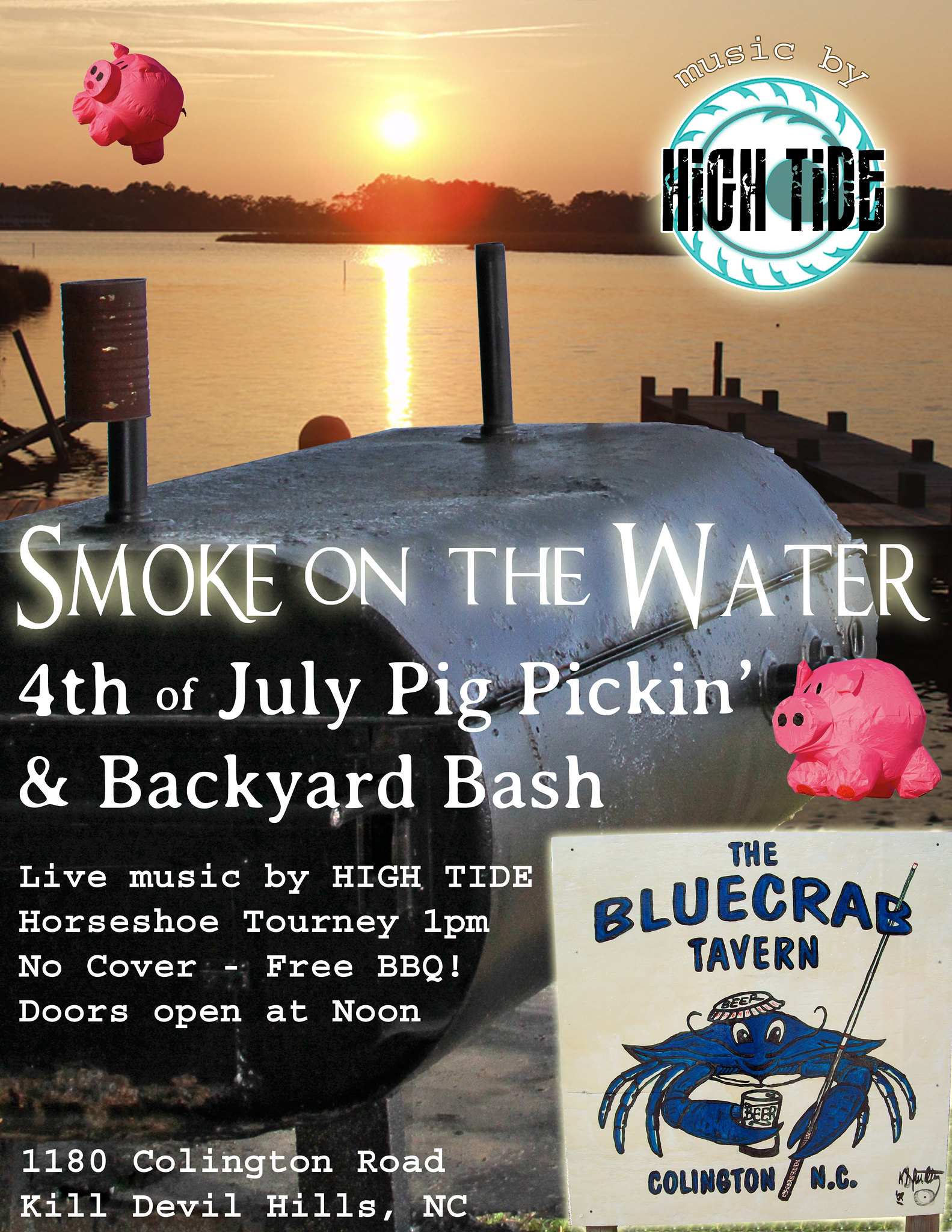
| Smoke On The Water - annual 4th of July party @ Blue Crab Tavern |
Showing posts with label Blue Crab Tavern. Show all posts
Showing posts with label Blue Crab Tavern. Show all posts
Thursday, June 20, 2013


Sunday, June 24, 2012
Boat Graveyard of Colington
Colington Island holds a secret. Somewhere within this estuary and it's vast network of salt creeks lies a watercraft graveyard.
Boat Graveyard of Colington from Captainwow on Vimeo.
The term 'Graveyard of the Atlantic' is used to describe the treacherous waters in the Atlantic Ocean along the Outer Banks of North Carolina. The hazards of severe weather, strong currents, and navigational challenges combined to cause the loss of thousands of ships and an unknown number of human lives. More than 1,000 ships have sunk in these waters since records began in 1526.
The area around the Colington, however, hides another graveyard. This 'Graveyard of Colington' is not caused by nature. For decades, it has become a place where waterman bring their boats to die. The boats in this video are not the result of Hurricane Irene or any other storm. Hidden up one of the many saltwater creeks around the island, a small fleet of fishing skiffs, sail boats and pleasure craft have a permanent berth in the marsh. At least two dozen have been scuttled here. Many more may lie on the bottom.
Colington Island is one part of a chain of barrier islands, which form the Outer Banks, separating the vast sounds of an estuarine system from the Atlantic Ocean. Historically a fishing village, Colington has become a development for vacation homes and affordable housing. The road leading onto the island is one of the most heavily traveled secondary roads in the state. That's why it's better to travel by water. Just be careful of the ghosts.
Boat Graveyard of Colington from Captainwow on Vimeo.
The term 'Graveyard of the Atlantic' is used to describe the treacherous waters in the Atlantic Ocean along the Outer Banks of North Carolina. The hazards of severe weather, strong currents, and navigational challenges combined to cause the loss of thousands of ships and an unknown number of human lives. More than 1,000 ships have sunk in these waters since records began in 1526.
The area around the Colington, however, hides another graveyard. This 'Graveyard of Colington' is not caused by nature. For decades, it has become a place where waterman bring their boats to die. The boats in this video are not the result of Hurricane Irene or any other storm. Hidden up one of the many saltwater creeks around the island, a small fleet of fishing skiffs, sail boats and pleasure craft have a permanent berth in the marsh. At least two dozen have been scuttled here. Many more may lie on the bottom.
Colington Island is one part of a chain of barrier islands, which form the Outer Banks, separating the vast sounds of an estuarine system from the Atlantic Ocean. Historically a fishing village, Colington has become a development for vacation homes and affordable housing. The road leading onto the island is one of the most heavily traveled secondary roads in the state. That's why it's better to travel by water. Just be careful of the ghosts.
Sunday, December 26, 2010
North Carolina crab slough Oysters, Colington Style
Eating North Carolina oysters, Colington style at the Blue Crab Tavern
Subscribe to:
Posts (Atom)



 Posts
Posts


